
PARTITUR · KW INSTITUTE FOR CONTEMPORARY ART · BERLIN
Nathalie Pozzi
“Partitur is the first international exhibition dedicated to Danish composer and sound artist Else Marie Pade (b. 1924, d. 2016, both DK), a path-maker of musique concrète and European electronic music. Over a career spanning multiple decades, Pade approached sound as a medium of electronically generated tunes, exploring intensities, multitudes, and dissonance. Her versatile oeuvre spans electronic works, chamber and orchestral music, children’s music, accompanying scores for TV and radio plays, and music drama, which carry listeners through fairy tales, cityscapes, and nightmares.”
KW Institute for Contemporary Art
"In the evening I could imagine that the stars and the moon and the sky uttered sounds and those turned into electronic music."
Else Marie Pade
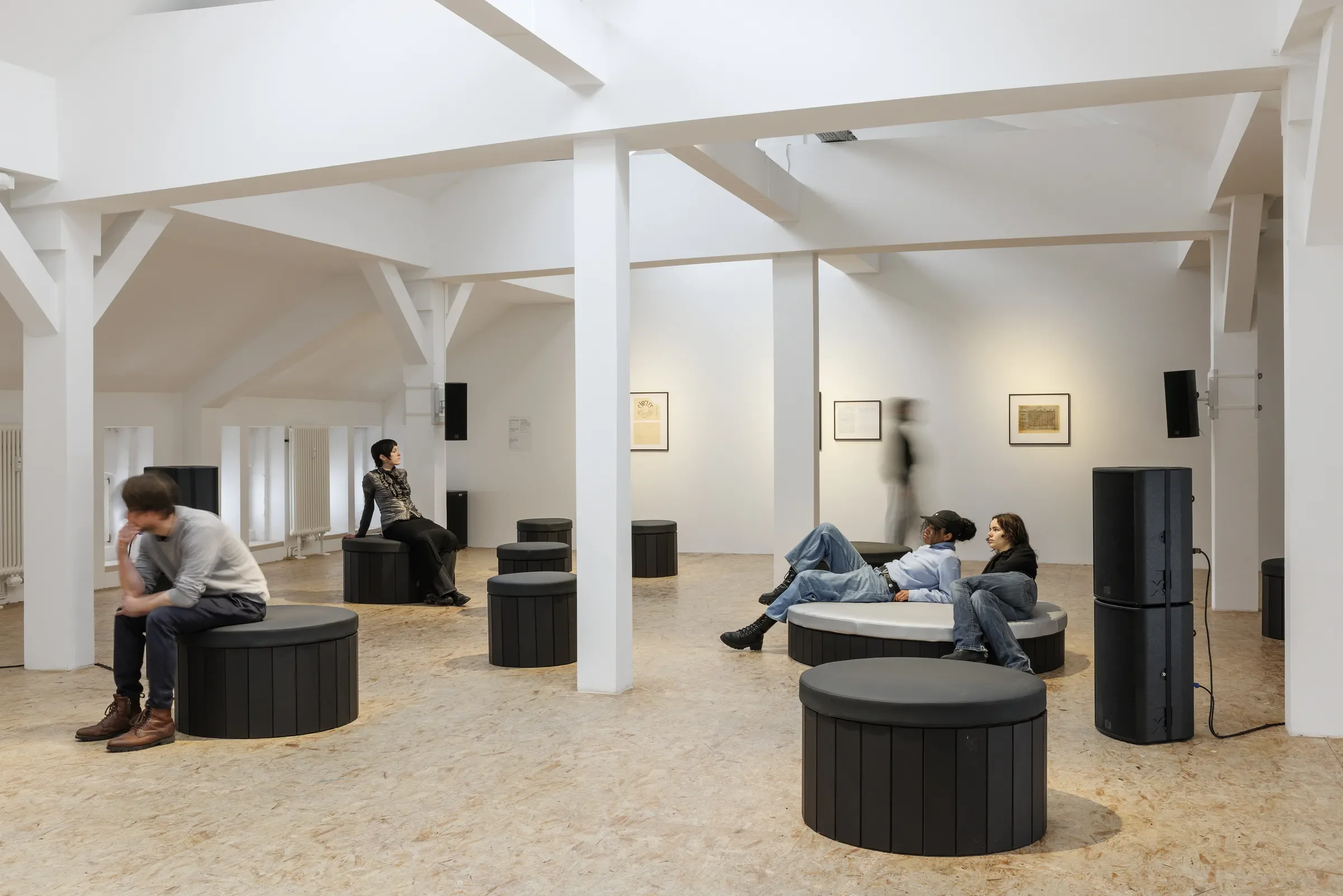
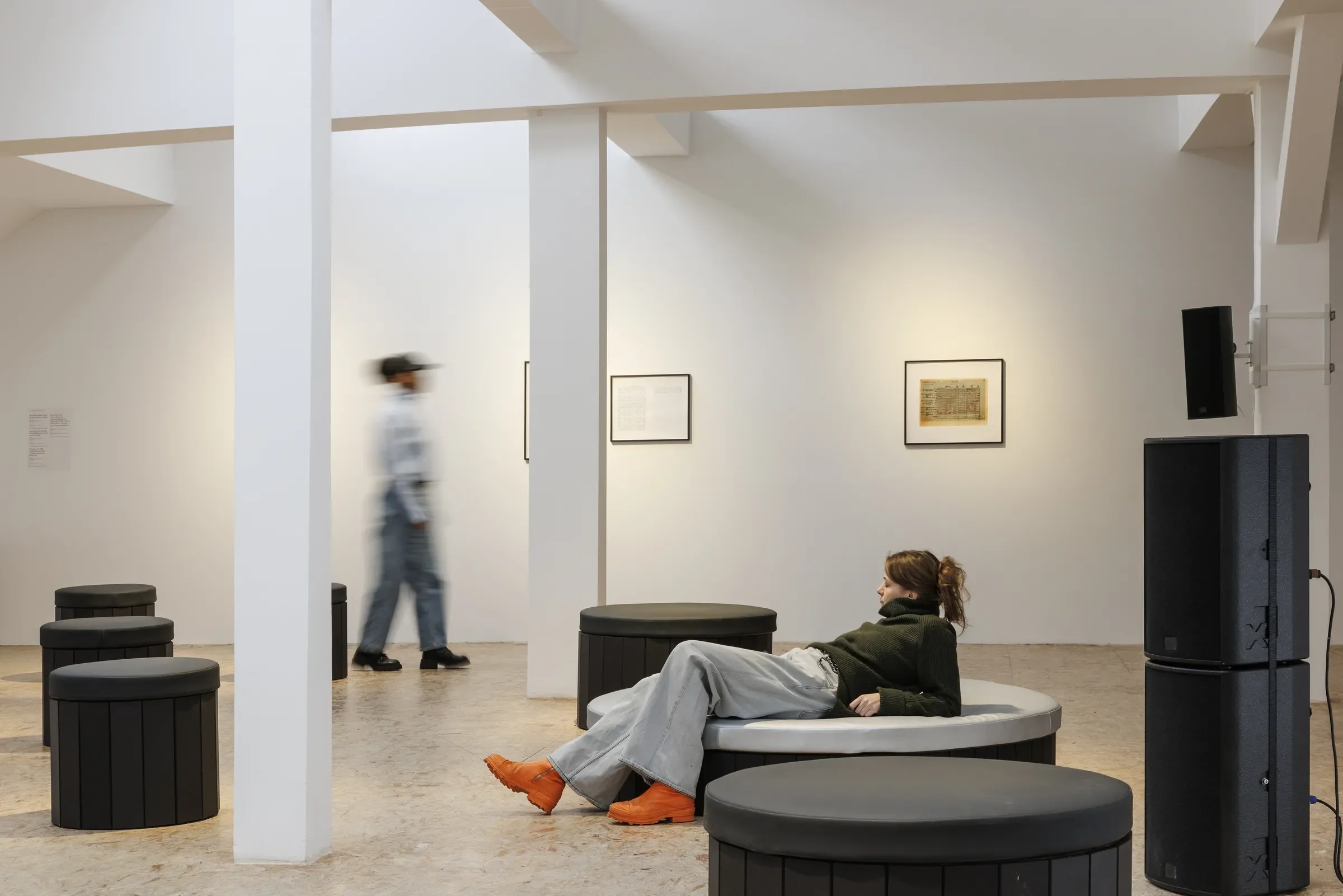
Installation view of the exhibition Else Marie Pade – Partitur at KW Institute for Contemporary Art, Berlin 2026. Courtesy the artist. Photo: Frank Sperling.
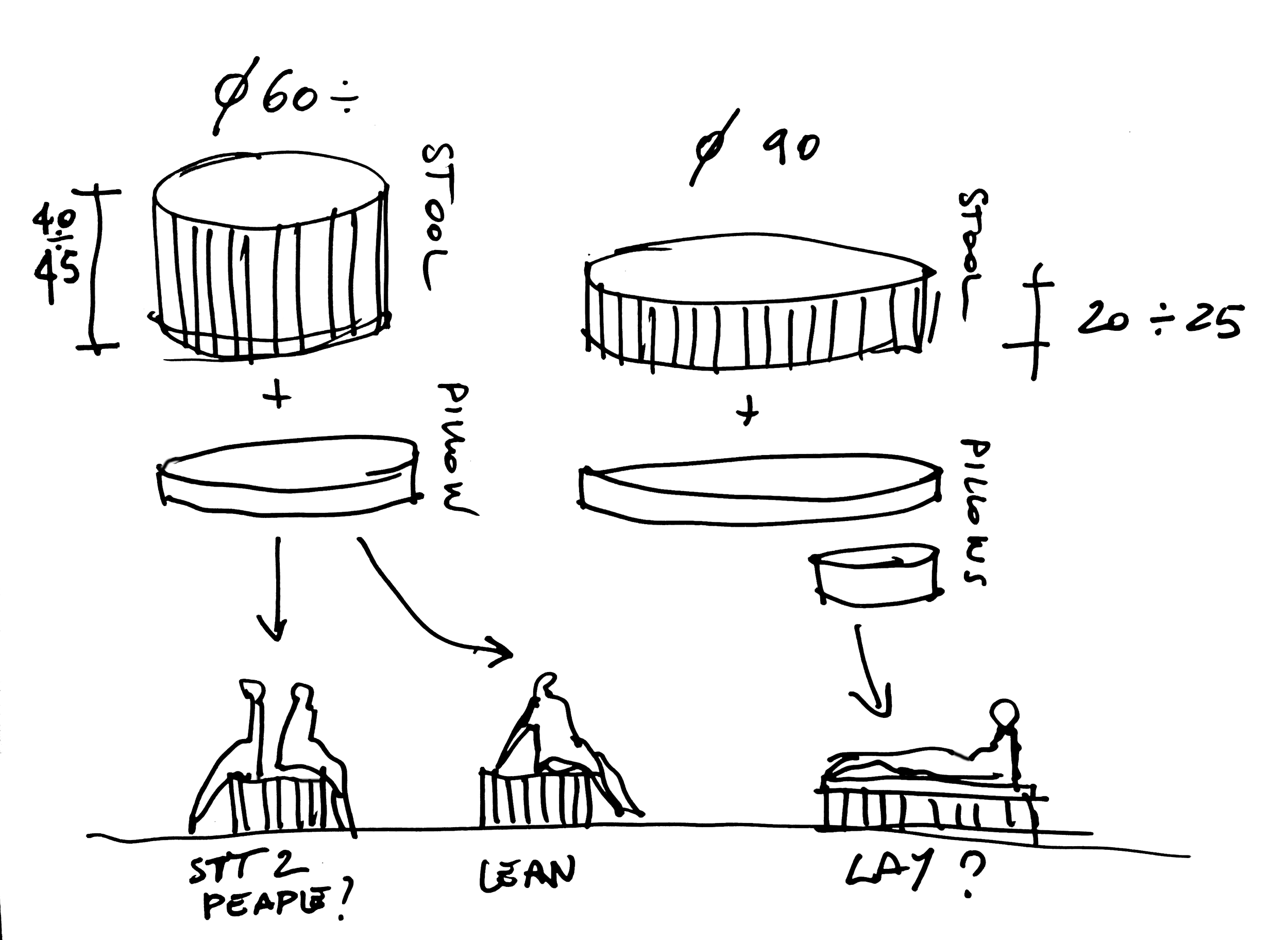
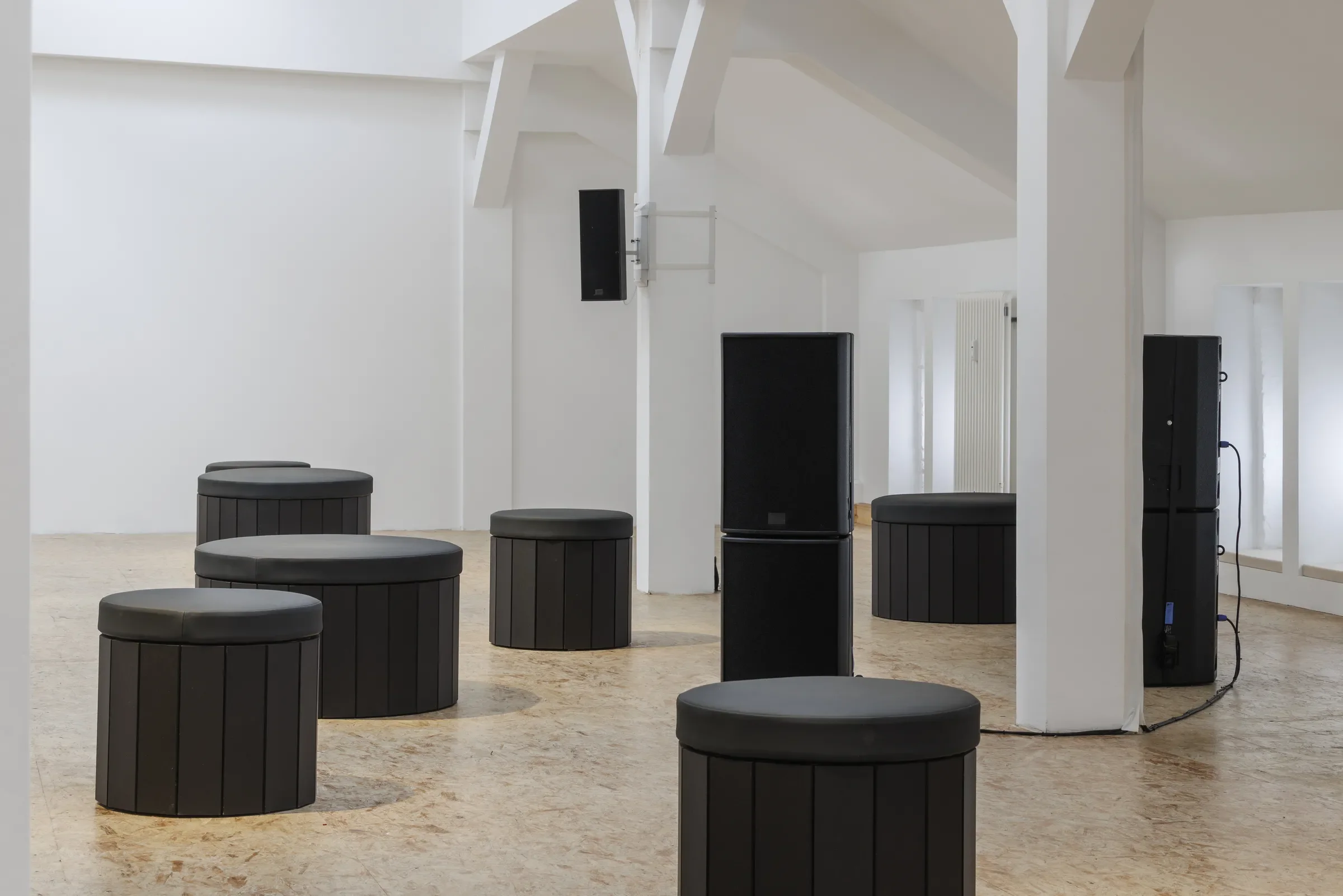
Spatial consulting and custom seating design for Partitur, an exhibition dedicated to composer and sound artist Else Marie Pade.
Artist
Else Marie Pade
b. 1924, d. 2016, both DK
Exhibition
Partitur
Year
22 February • 10 May 2026
Location
KW Institute for Contemporary Art • Berlin
Curator
Sofie Krogh Christensen
Made possible by
New Carlsberg Foundation.
Photo credits
Installation view of the exhibition
Else Marie Pade – Partitur
at KW Institute for Contemporary Art, Berlin 2026.
Courtesy the artist. Photo: Frank Sperling.
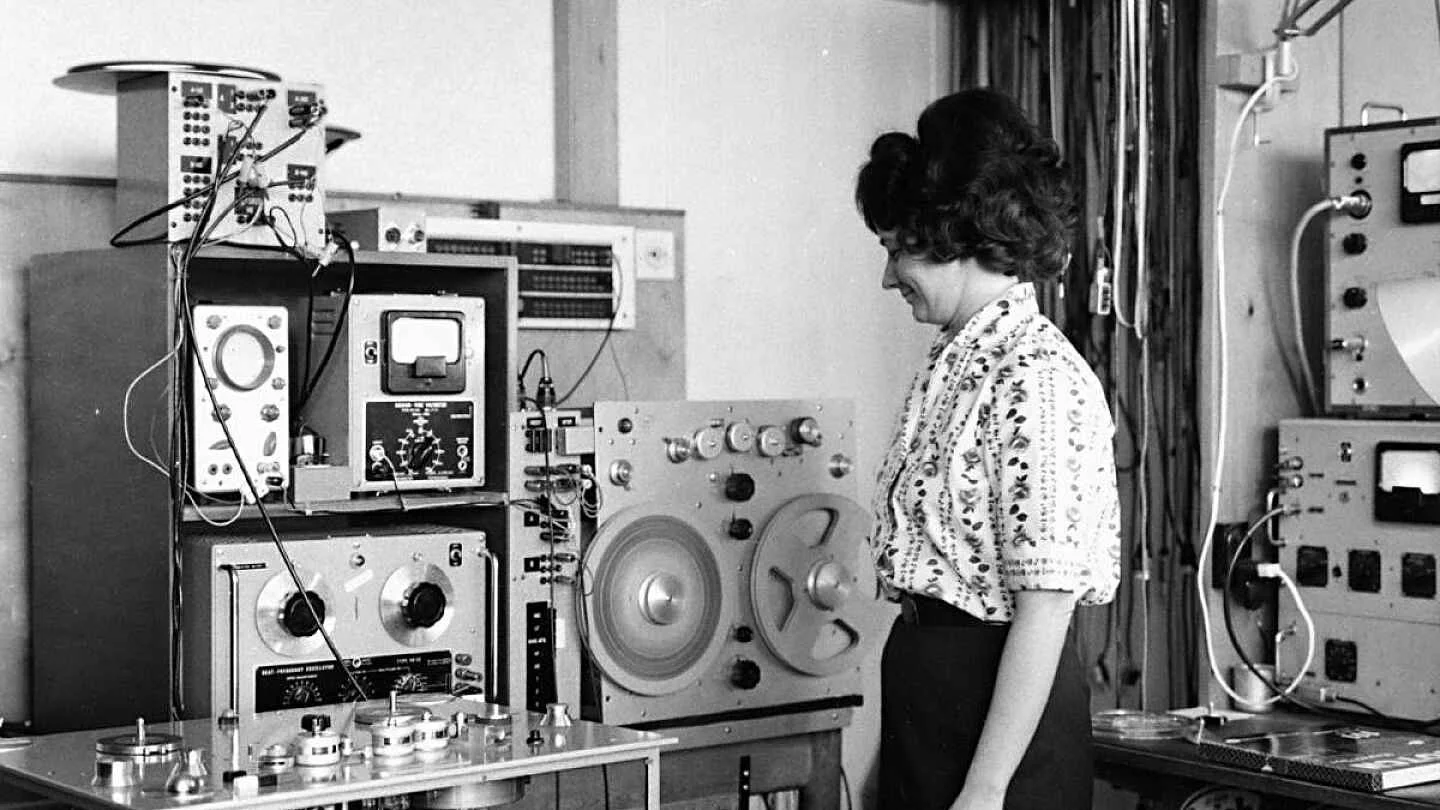
Else Marie Pade, 1962; Photo: Unknown.

“Shaped by the structure of her scores, the exhibition forms an immersive listening space.”
KW Institute for Contemporary Art

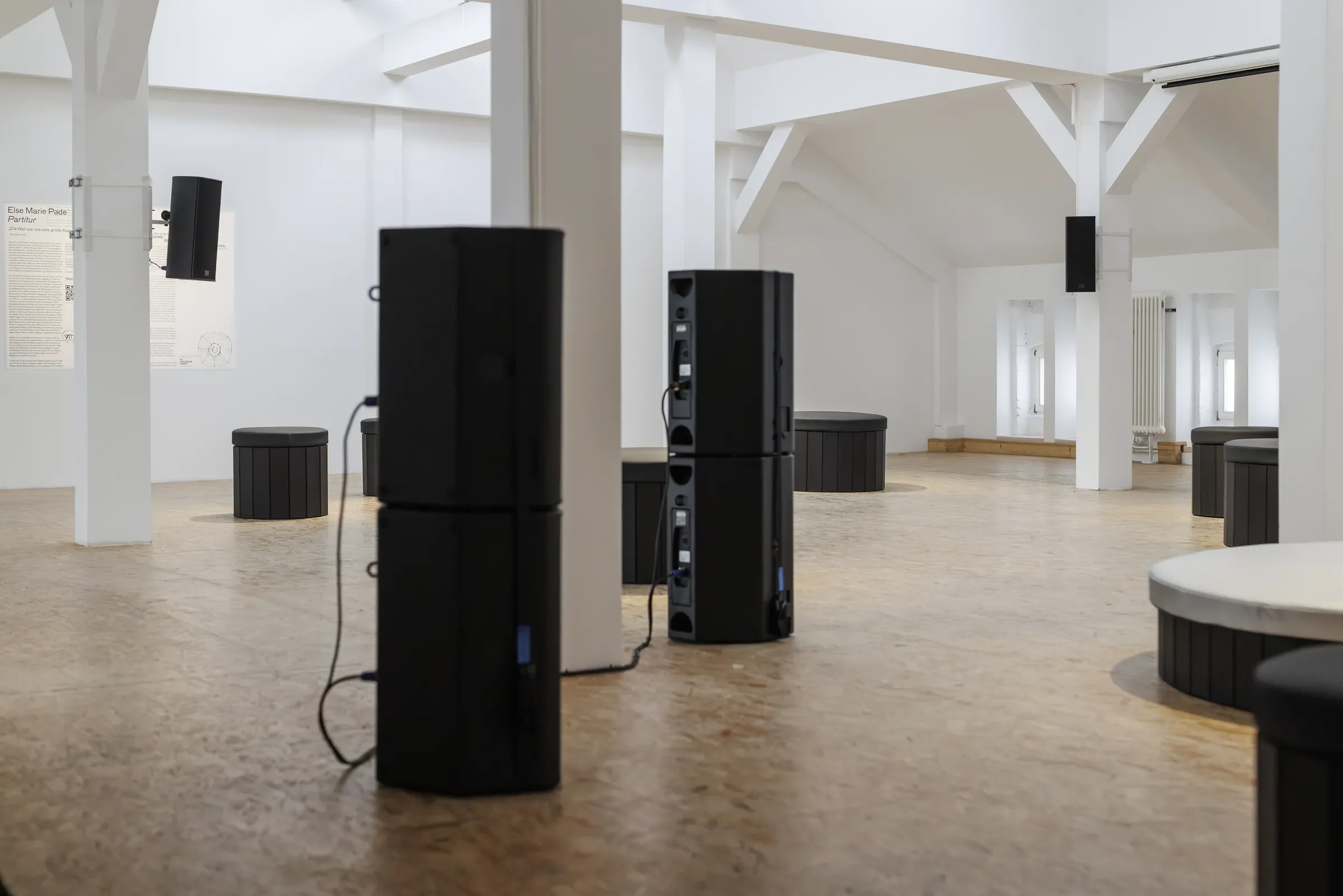
Installation view of the exhibition Else Marie Pade – Partitur at KW Institute for Contemporary Art, Berlin 2026. Courtesy the artist. Photo: Frank Sperling.
The spatial design for Partitur draws its formal language from the dials, knobs, and circular interfaces of the electronic studio equipment that defined Else Marie Pade's compositional practice.
Round seating elements of varying sizes are distributed across the exhibition space, referencing the analog controls through which Pade shaped sound, tuning frequencies, adjusting intensities, navigating dissonance.
Some of the seats rotate on their own axis, inviting visitors to orient themselves freely within the sonic field. In a predominantly sound-based exhibition, this small gesture carries significant weight: as listeners turn, they become part of the composition themselves: their positions, movements, and proximities to one another forming an ever-shifting human score within the space.
The design was developed in consultation with the curatorial team and realized by the workshop of KW Institute for Contemporary Art.
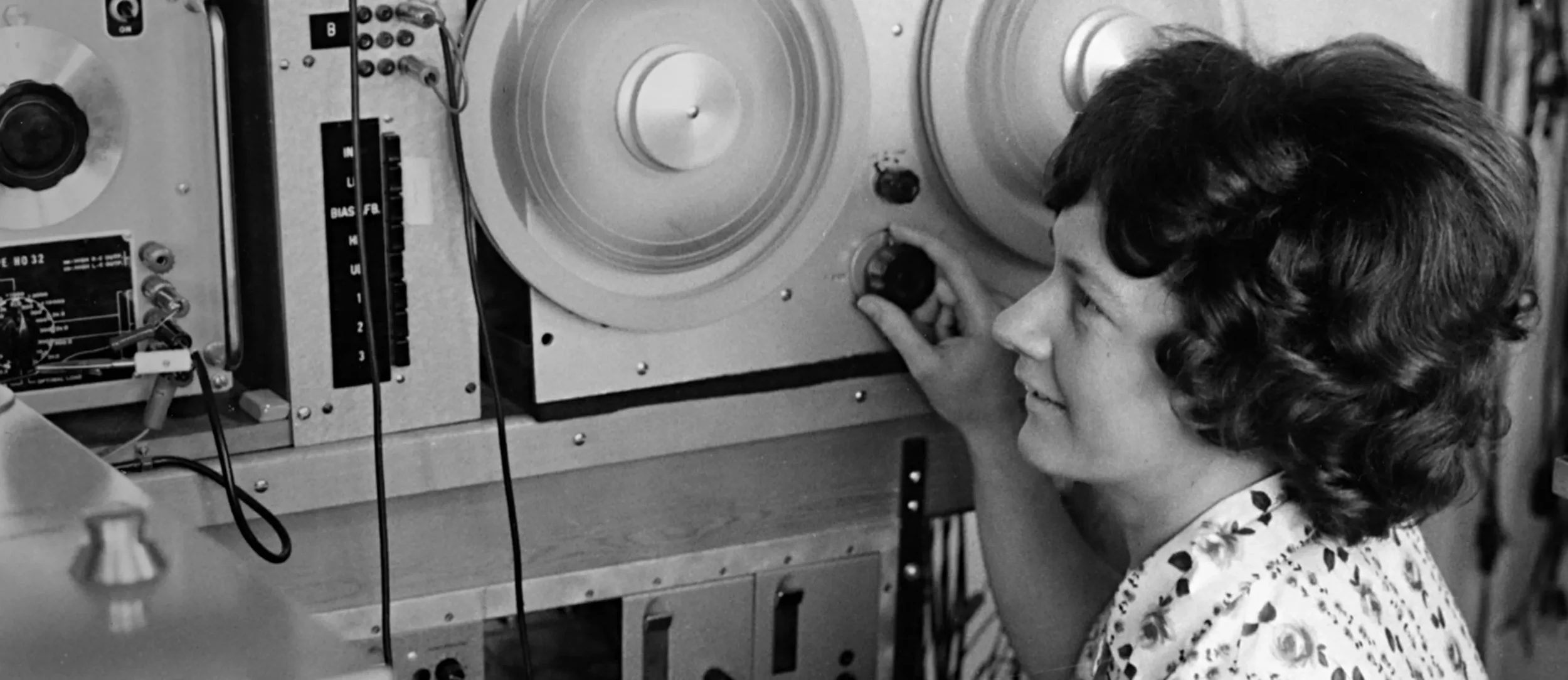
Else Marie Pade, 1962; Photo: Unknown.
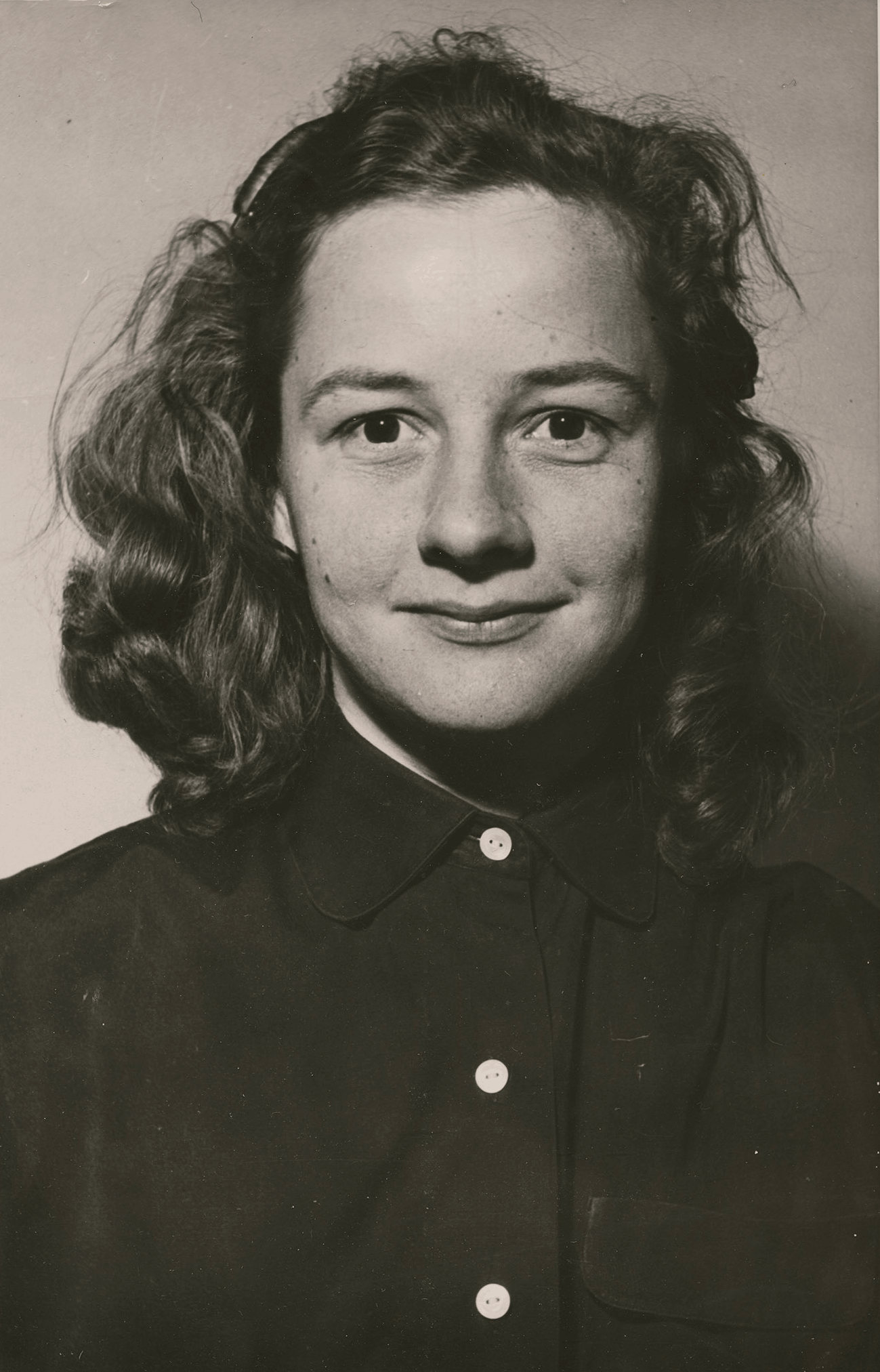
Else Marie Pade; Photo: Unknown.
“Else Marie Pade (*1924–†2016) is regarded as Denmark’s most significant pioneer in electronic music and musique concrète. She began composing after the Second World War, during which she was imprisoned for her involvement in the women’s resistance. In 1952, she discovered musique concrète through radio broadcasts, which inspired her to establish an electronic music studio at Danish Radio in the early 1950s. She closely followed contemporary European trends in new music and her encounters with Pierre Schaeffer, Karlheinz Stockhausen, and György Ligeti were influential for her development. Her versatile oeuvre spans electronic works, chamber and orchestral music, children’s music, radio plays, and music drama.
Her work, although largely forgotten in Danish music history after the early 1980s, has received renewed attention since the 2000s, with numerous new recordings, remixes, and performances.”
“In addition to machines, physics, storytelling, and later, Christian spirituality, Pade’s musical understanding was also rooted in her experiences from World War II, during which she was imprisoned in the internment camp in Frøslev, Denmark, for her involvement in the women’s resistance.”
KW Institute for Contemporary Art
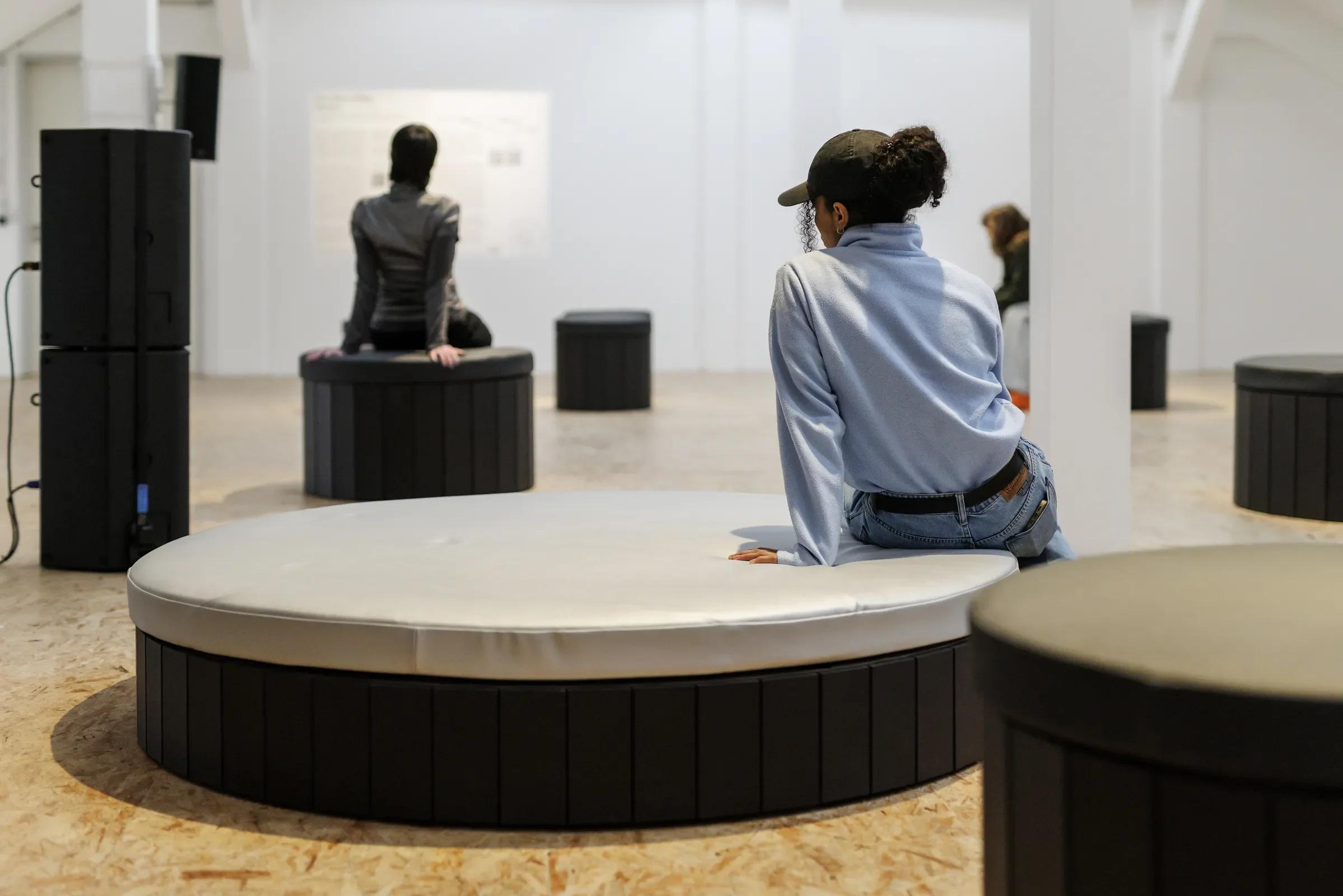
Installation view of the exhibition Else Marie Pade – Partitur at KW Institute for Contemporary Art, Berlin 2026. Courtesy the artist. Photo: Frank Sperling.
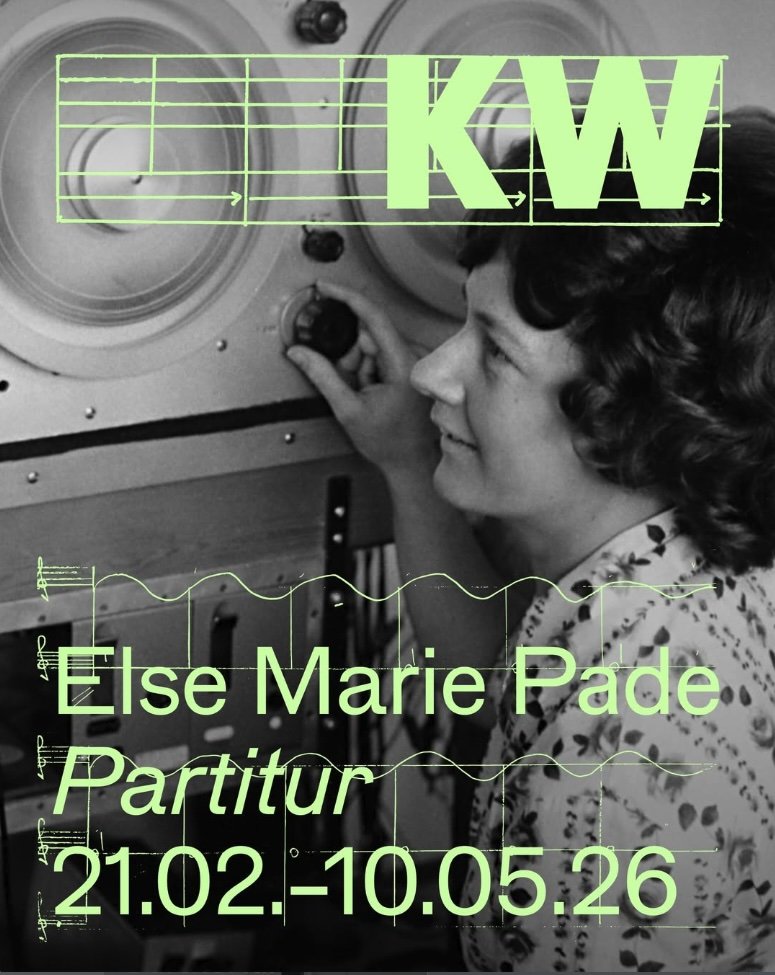
Exhibition Poster by KW Institute for Contemporary Art.
Meanwhile at KW in Berlin…